Griffith, Lake County
In Griffith the shelf has to give the car door back
Griffith is a small town of small houses. A lot of the stock here went up in the middle of the last century on lots that were never generous to start with, and the garage got whatever was left at the back. Some are a true single car. Plenty of the two car ones are short, or narrow, or both. Walk a few blocks off Broad Street and the same garage keeps turning up: one bay, one side door, and a wall with barely enough room in front of it to carry a bin past.
So the first thing I ask about in Griffith is not how much stuff you have. It is where your car door lands when you open it.
That sounds like a detail. It is the whole job. A shelf built 4 inches deeper than the room allows does not feel 4 inches wrong. It means you climb out of the car sideways every morning, or you quietly stop parking in there, which is how the garage filled up the first time. Shelving that fits is shelving you keep.
Depth is the whole decision here
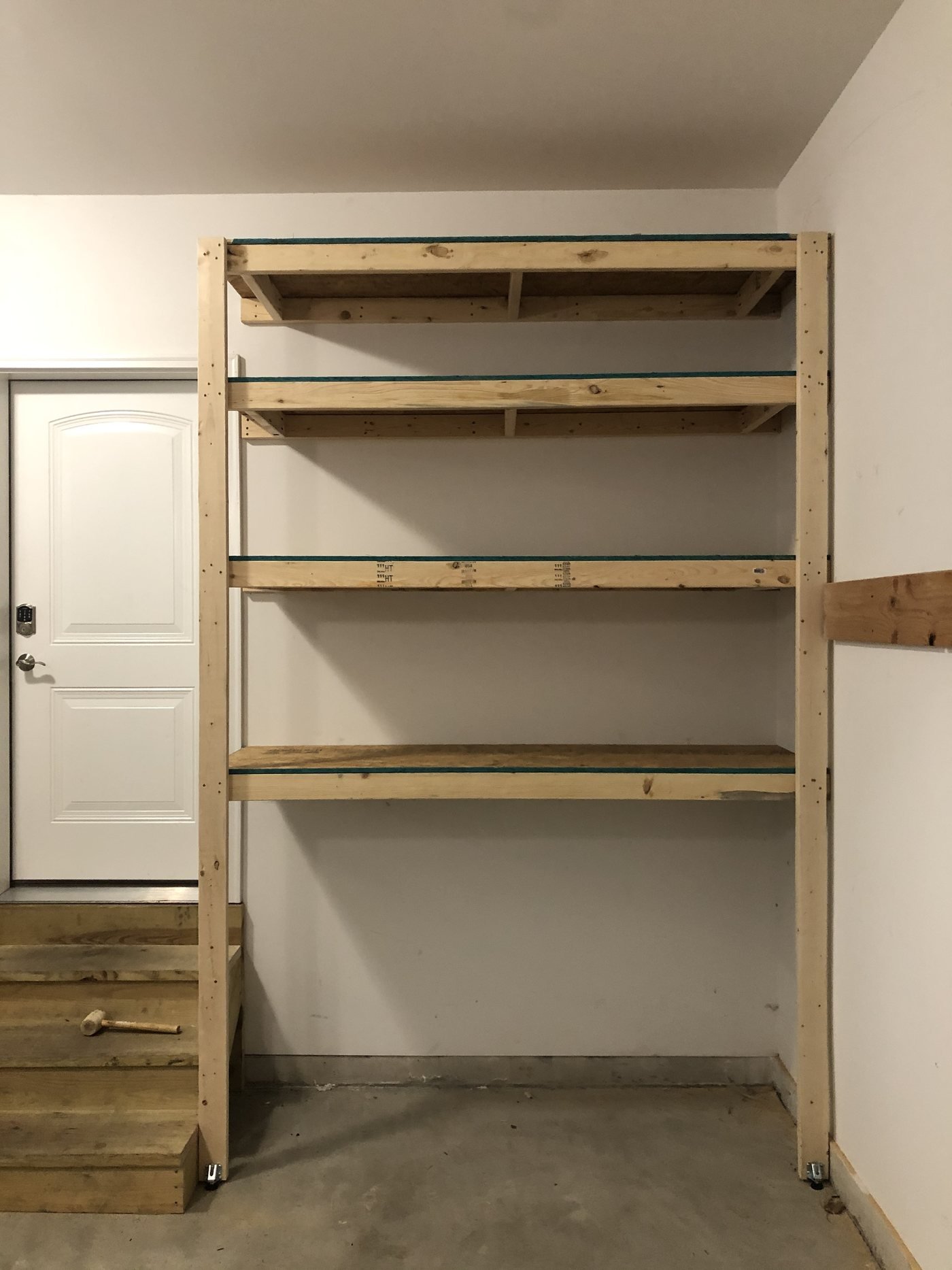
In most towns the conversation starts with how much wall you have. In Griffith it starts with how much depth you can spare, and the math runs backwards from the car.
Measure the bay. Take off the car including the mirrors. Take off the driver door at the swing you actually use. Leave yourself room to walk past with both hands full. Whatever is left is the shelf. In a tight garage that number often lands shallower than a standard steel rack, and that is exactly the problem with a rack: it comes in one depth whether your room has it or not.
Here is what each inch of depth actually buys, so you can see the trade before we ever get on a call.
| Shelf depth | What it holds well | Where it works in a tight garage |
|---|---|---|
| 12 inches | Paint, hardware bins, hand tools, cleaning supplies | The wall your car door opens into |
| 14 to 16 inches | Medium totes, small coolers, sports gear | Most side walls, above hood height |
| 18 to 20 inches | A large tote pushed all the way back | The front or back wall, rarely a side wall |
| 24 inches | Big coolers, camping gear, bulk bags | Usually too deep unless the bay is a genuine 2 car |
Shallow is not a downgrade. It moves the storage up instead of out. Griffith garages tend to be taller than they are generous, and the wall above shoulder height is doing nothing at all. Five tiers at 14 inches deep will swallow more than 3 tiers at 24 inches, and you can still open the door. It is the same custom garage shelving system I build everywhere, set to a depth this town can give up, carried by 2x4 ledgers anchored into the framing instead of by legs standing in your walking room.
Before the call
The 4 numbers that decide a Griffith garage
None of these need a careful tape measure. Rough is fine. They are what turn a guess into a drawing.
Wall to where the car really parks
Not the middle of the bay. The spot the car has lived in for years, mirror to wall. That is the number the shelf has to respect.
The door at the swing you use
Open the driver door the way you actually open it, then measure from the door edge to the wall. Most people are surprised by that one.
Your biggest tote
Length, width and height of the largest bin you own, plus roughly how many of them there are. Tier spacing comes straight off that.
Ceiling height and what hangs from it
Garage door track, the opener rail, the light, any cross bracing. Those set the top tier and tell me where a run has to stop.
Under an older Griffith house
Block walls take a different fastener, not a different shelf
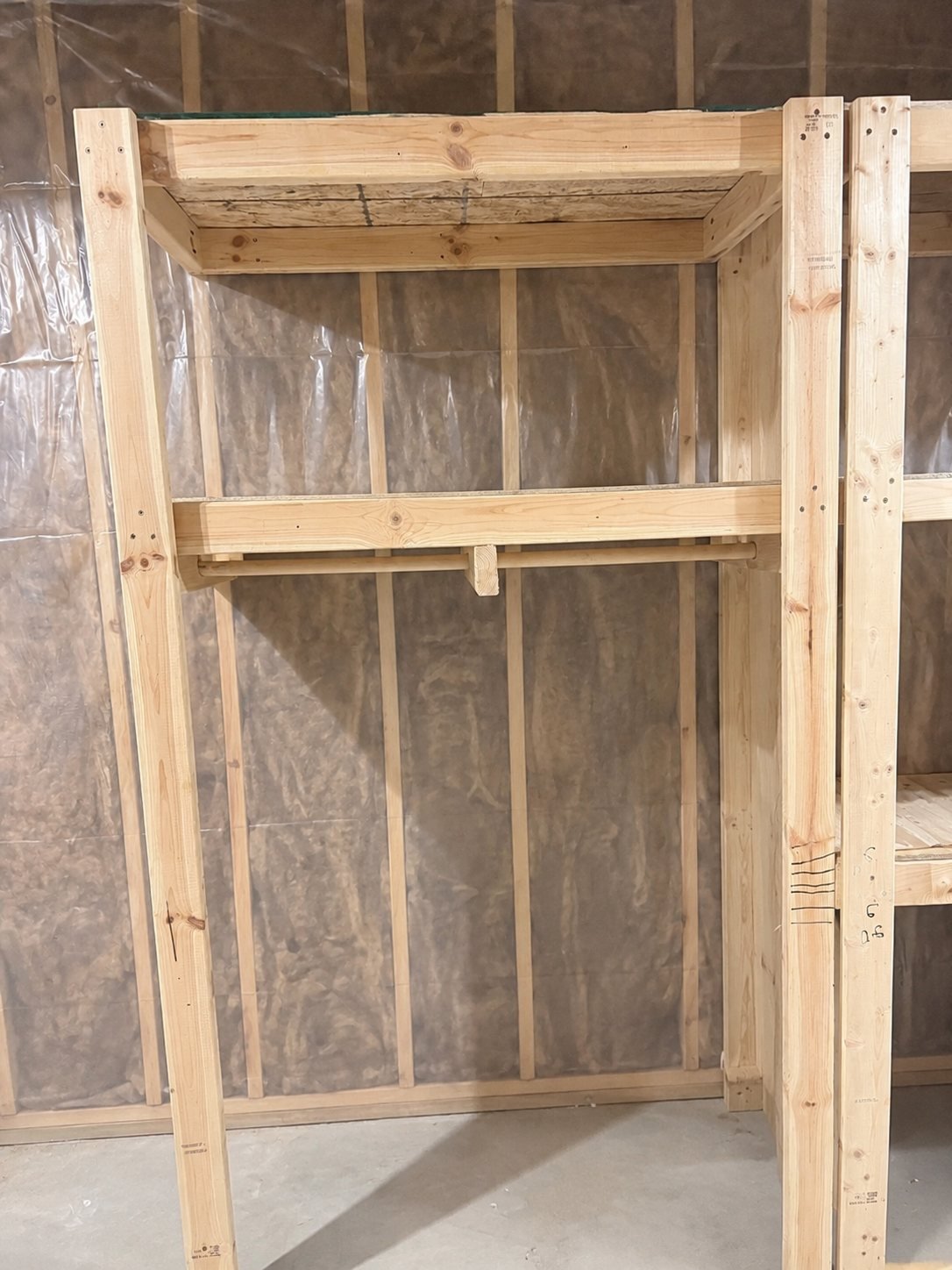
Plenty of the basements under these houses are still the original foundation: concrete block, bare, painted at some point, with nothing framed in front of it. There is no stud to find because there are no studs. That does not change the shelf. It changes how the back edge gets held on.
A lag screw is a wood fastener. It needs something to thread into, and hollow block does not give it that. So on a bare block wall the ledger goes up on masonry fasteners rated for block, set into the solid part rather than into a mortar joint, and spaced tighter than I would space lags in framing. The front uprights still run all the way to the floor and carry the front edge, so the wall is sharing the load instead of holding all of it. If somebody framed and drywalled that basement along the way, we are back to lag screws into studs and it is an ordinary day.
The other habit of older basements around here is low headroom. The joists sit closer to your head, and the duct trunk and the main water line were run wherever they fit, which is usually straight across the best wall in the room. That is not a reason to skip it. It is a reason to plan the run in bays: full height where the ceiling is clear, shorter bays under the ducts, and the tall bins sorted to the tall bays. Basement shelving built that way gets everything off a floor that has probably taken water at least once.
What else gets built in a Griffith house
The garage is usually the first call, but it is rarely the only room with the problem. Smaller houses mean everything has to live somewhere, and there are only so many somewheres.
- Basement storage shelving for the bins, the holiday tubs and the overflow from a kitchen with no pantry.
- Wall-mounted and heavy-duty shelving where the load is real: tools, salt bags, paint by the case.
- Utility and storage room shelving for the laundry corner, the mechanical wall and the space under the stairs.
- Garage and basement organization when you want the whole thing sorted, not just a wall built.
Griffith is never a scheduling problem
I live in Munster, and Griffith sits a few minutes east of there, between Highland and Merrillville. That is true, and it is convenient, but it is not why you will get a fast answer.
The reason is that the estimate is a video call. You pick a couple of windows that suit you, we get on your phone for about 10 minutes, you walk me along the wall and read me a few rough numbers, and I price the job before we hang up. Nothing is waiting on a truck being in the area. Griffith, Highland, Merrillville or the far side of the county, it is the same call and the same real number.
There is nothing to tidy up first either, which matters more than people let on when the room in question is the one they have been avoiding. When I do turn up, it is the day the shelves go in, and most jobs are finished in a day. It is me on the call and me on the ladder, and the work is backed by a workmanship warranty. Book a time that works, see the rest of the towns I cover, or call (219) 209-2484.
How it works
Get your Griffith price on a 10 minute video call
Your choice, either way. Text me and I will confirm a time, usually the same day. Three steps, about ten minutes.
Text me
Text me your town, what you want shelves in, and a couple of day and time windows that work. Texting is the fastest way to get hold of me.
Video call or I come out
Your choice. Most people do a short video call from their phone. If you would rather I came and stood in the space, I will do that too.
Get your price
I price the job right there, on the call or in your driveway. No waiting a week for a proposal.
Straight answers
Griffith shelving questions
My garage is a single car and it is already tight. Is shelving even realistic?
That is the most common garage in town, and yes. A single bay still has 3 usable walls and nearly all of its height is free. The difference is that the shelving goes shallower and taller than it would in a big suburban garage. Shallow tiers protect the walking room and the door swing, and the extra tiers win the capacity back. You lose nothing you were actually using.
How do I check whether a shelf will block my car door before we talk?
Park the way you normally park. Open the driver door as wide as you really open it. Measure from the outside edge of that open door to the wall, then take about 6 inches off for knuckles and winter coats. What is left is the most depth that wall can take. Bring me that number on the call and half the design is already done.
Why can you not just lag a ledger into my block basement wall?
Because a lag screw is a wood fastener. It needs something to thread into, and hollow concrete block does not give it that. On a block wall I use masonry fasteners rated for it, set into the solid part of the block rather than the mortar joints, and spaced tighter than lags in framing. The front uprights still run to the floor, so the wall shares the load instead of carrying it alone. Same shelf, held on the way that wall requires.
The opener rail runs straight down the middle of my garage ceiling. Does that kill the plan?
No. The opener rail and the garage door track are two of the most ordinary things I build around. The rail sits over the middle of the bay and the shelving lives on the walls, so they rarely argue. Where it does matter is the top tier on the door wall, because the track curves back into the ceiling there. That gets drawn in before anything is cut.
Will I actually be able to park in there when you are done?
That is the point of setting depth first. In an older garage a row of bins on the floor eats more room than a shelf does, because bins stack out into the bay while a shelf stops at a line we chose. Get it all up on the wall at a depth the room can spare and the car fits back in. Most people park in there the same night.
My basement stairs are narrow and turn at the bottom. Can you still get material down?
Usually, and it comes up often in older houses here. Where a full sheet of plywood or an 8 foot 2x4 will not make the turn, I cut the material to length before it goes down and assemble the frame in the room. That changes my day, not your shelf. Show me the stairs on the video call and I will tell you straight away.
Related reading
More on this, in plain English
The questions I get asked most, written down so you can read them before you ever call me.
How Deep Should Garage Shelves Be?
How deep should garage shelves be? About 18 to 20 inches for large totes, 12 to 16 for tools and paint, and why past 24 inches you cannot reach the ba.
Read itCustom Wood Shelving vs Store-Bought Metal and Plastic Racks
Custom wood shelving vs store-bought garage racks: cost, tote fit, load behavior, anchoring and lifespan compared, plus a rule for choosing without a.
Read itDo Garage Shelves Need to Be Anchored Into Studs?
Yes, garage shelves need anchoring into studs or masonry. Why drywall anchors fail, how to find studs, what screws to use, and what to do on a block w.
Read itBook it
Let me price your Griffith shelves on a video call
Pick a couple of windows that suit you, show me the garage or the basement on your phone, and you will have a real number before we hang up.